
Waymo vehicles avoid accidents by using a sophisticated array of 360° sensors, detailed mapping, and AI technology that allows them to quickly assess and react to potential threats. Even with proactive avoidance systems, extensive real-world testing is essential.
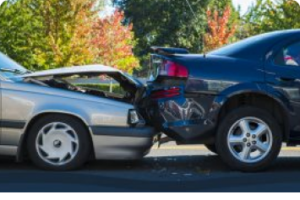
As advanced as Waymo vehicles may be, they still get into accidents. Sometimes these accidents are caused by other drivers, but sometimes Waymo may be at fault. If you have been in a crash with a Waymo vehicle, a personal injury lawyer can help you understand your rights.
Our car accident lawyers in Fort Lauderdale have recovered more than $250 million in awards and settlements for our clients. We’re a legal family dedicated to serving others and winning cases. Call for your free consultation and tell us about your Waymo accident.
360° Sensor Vision
Waymo vehicles use several types of sensors to understand the world around them. This gives the car full-circle awareness from different inputs and allows the vehicle to navigate without the need for human guidance. The three main types of sensors Waymo cars use are:
LiDAR
LiDAR sends millions of laser pulses per second and measures how long they take to return. Using time-of-flight calculations, it can accurately determine object shape and distance. LiDAR works day or night and provides strong depth perception for autonomous driving.
Radar
Radar emits radio waves that reflect off objects and return to the sensor. It can calculate distance and speed by measuring return time and frequency shift. Radar has been around for almost a century, but it still has its place alongside cutting-edge technology.
Cameras
Waymo uses cameras to capture clear images around the vehicle. AI analyzes these images to identify obstacles and road markings. It can recognize colors, read text, and understand what these elements mean.
Predictive AI
Waymo’s Predictive AI analyzes the behavior, speed, and direction of nearby vehicles, as well as pedestrians and cyclists, to forecast their possible future movements. It evaluates multiple scenarios in real time and selects the safest driving response.
This proactive approach helps the vehicle anticipate risks before they materialize, and is one of the key ways Waymo vehicles avoid accidents.
High-Definition Mapping
Waymo creates highly detailed HD maps containing lane boundaries, traffic lights, crosswalks, road geometry, and precise spatial measurements. The vehicle compares real-time sensor data to these maps to determine its exact location and detect changes.
HD maps provide environmental context and precise positioning accuracy.
Real-World and Simulated Testing
Waymo tests its self-driving cars by driving millions of miles on real roads and simulating billions of miles in a virtual environment. Driving on real roads helps the cars deal with actual traffic and conditions, while simulations allow them to practice handling rare or dangerous situations safely.
These two testing methods work together to make the cars more reliable, improve their ability to handle tricky situations, and enhance overall safety for autonomous driving.
Call or text 800-602-5000 or complete a Free Case Evaluation form

Risk-Adverse Driving Strategies
Waymo designs its vehicles to drive conservatively and defensively, prioritizing safety over speed or assertiveness. The car behaves like a highly cautious driver and does not suffer from human errors such as distracted driving or reckless behavior.
- Conservative Decision–Making: Waymo chooses the safest reasonable action, even if it is slower. It yields early, waits for clear traffic gaps, and defaults to caution when uncertain.
- Larger Safety Buffers: Waymo vehicles keep a greater distance from the cars in front of them. They can spot potential dangers like cyclists or pedestrians and make sure to leave extra space.
- Predictable Driving: Other drivers and pedestrians can anticipate and respond to predictable driving behaviors. Waymo prioritizes gradual acceleration and avoids sudden movements.
- Handling Uncertainty: When things are unclear or confusing, a Waymo car slows down or might stop completely. It sees uncertainty as a risk and puts safety first, even if it means not maintaining speed or flow.
- Built-In Redundancy: Waymo uses overlapping sensors and systems to maintain safe operation if data conflicts or a sensor is blocked, avoiding risky decisions without high confidence.
Waymo Accidents
Waymo avoids accidents by using a combination of full-range sensors, high-definition mapping, predictive AI, and intensive, real-world testing. These systems allow the vehicles to understand the world around them and assess threats so they can avoid crashes.
Even so, Waymo vehicles have still been involved in accidents. However, Waymo’s Safety Impact disclosure indicates lower rates of certain types of injury-related crashes compared to human drivers operating in similar environments.
Get Help From Our Legal Team
Waymo and companies like it are likely only the beginning of driverless vehicle technology. While Waymo is mostly safe, accidents still happen, and when they do, someone has to be accountable. If you have been injured in an accident with a Waymo, our legal team can help.
Our team at Blakeley Car Accident & Personal Injury Lawyers has over 40 years of combined experience. We are a legal family committed to serving others and winning cases. Call today to schedule your free consultation and tell us about your Waymo accident.